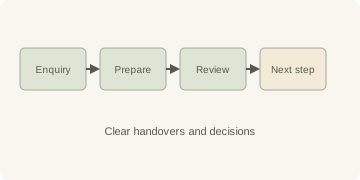
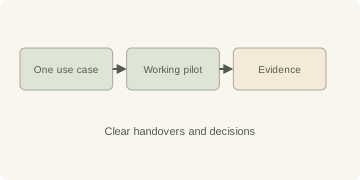
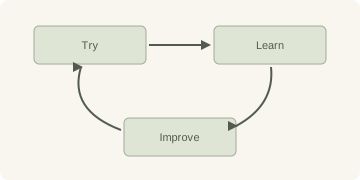
I use Discover, Design, Develop and Deliver to guide our work together. We move back and forth as we learn, building and delivering value in small, useful increments.
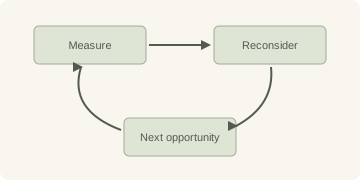
Learn from delivery. Discover what comes next.
Each phase informs the others. What we learn in use can reshape the opportunity, improve the design or guide the next increment.
01 / Discover
Find the opportunity worth pursuing
Understand your ambition, customers, current work and constraints. Establish what would make a meaningful difference.
Business strategy
Connect the work to your ambition
A useful AI investment starts with the business you want to build.
What we do together
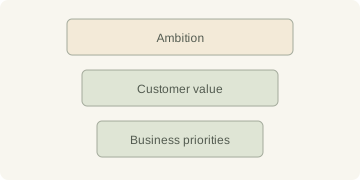
We work through your goals, customer promise, strengths and commercial priorities in a focused leadership conversation. We identify where growth, margin, capacity or resilience needs attention.
You leave withA business context map and agreed priorities.
Customer research
Understand what customers really need
The first request is not always the underlying need.
What we do together
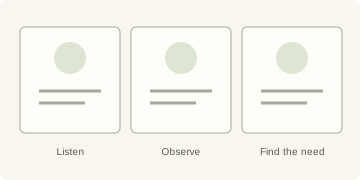
We speak with customers and frontline staff, examine recent enquiries and observe how people get work done. We separate evidence from assumptions and record questions still to answer.
You leave withA customer needs summary with evidence and open questions.
Customer journey mapping
Find where the experience breaks down
Delays and repeated effort often sit between individual tasks.
What we do together
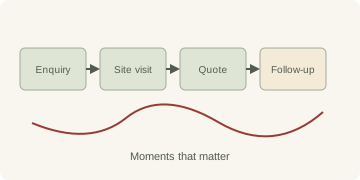
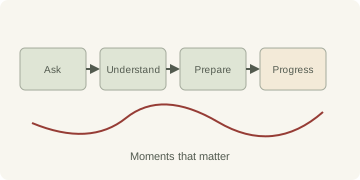
Together we map a real journey from first enquiry to follow-up, using examples and customer conversations. We mark questions, friction, emotions and missed opportunities at each step.
You leave withA current journey map with priority friction points.
Process and handover mapping
See what keeps the work moving
Hidden coordination makes work difficult to improve.
What we do together
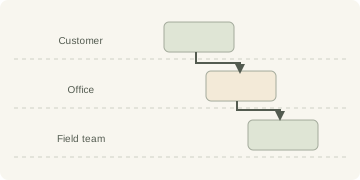
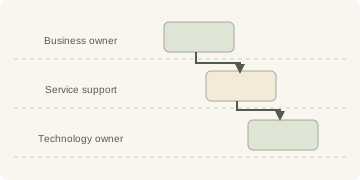
We trace who does what, which information they need and where work waits. Staff walk us through real cases, including exceptions and the informal workarounds that keep things running.
You leave withA current process map with handovers, delays and owners.
Technology and information review
Know what you can build on
Existing systems, knowledge and data shape what is practical.
What we do together
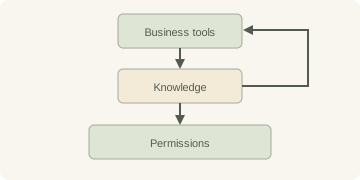
We review the tools you use, available integrations, information quality, permissions and operating constraints. We identify useful existing capability and the gaps that could block delivery.
You leave withA systems and information inventory with constraints and gaps.
Opportunity assessment
Choose a worthwhile first step
Not every possible automation deserves investment.
What we do together
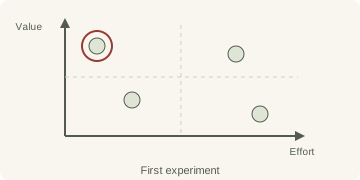
We compare opportunities by customer value, business impact, effort, uncertainty and risk. Together we define a baseline, success measures and the assumptions a small experiment should test.
You leave withA prioritised opportunity backlog and measurable experiment brief.
Before moving on
A shared opportunity brief and a decision about what deserves exploration.
We review the evidence together and agree whether to proceed, adjust or stop.
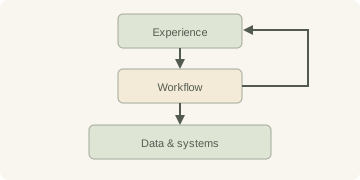
Shape the experience, workflows and technology. Test important assumptions before committing to a larger build.
Future customer journeys
Design a better experience from end to end
A faster task should contribute to a better overall experience.
What we do together
We sketch the future journey with customers and staff, showing what changes and what should stay human. We test the sequence against realistic situations and the outcomes agreed in discovery.
You leave withA future journey map showing the intended experience.
Service blueprinting
Connect the customer promise to the work behind it
A good experience depends on more than the visible interface.
What we do together
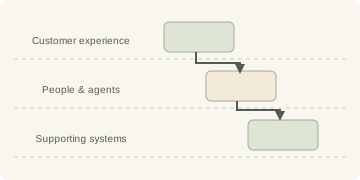
We align customer actions with staff work, agent activity, supporting systems and information flows. We make dependencies and responsibility clear across the visible and behind-the-scenes service.
You leave withA service blueprint linking customer experience to delivery.
Workflow and agent design
Give each person and agent a clear role
Useful agents need boundaries, context and a way to act.
What we do together
We define triggers, information sources, tools, decisions and handovers. We design when an agent proceeds, when someone reviews its work and how exceptions or uncertainty are handled.
You leave withAn agent and workflow specification with review points.
Experience design and prototyping
Test the idea before the full build
A tangible example reveals misunderstandings early.
What we do together
We make sketches, interface prototypes or a small working demonstration. People try representative tasks while we observe what they understand, where they hesitate and what needs to change.
You leave withA tested prototype with findings and design decisions.
Solution architecture
Make the parts work together
Reliable delivery depends on the joins between components.
What we do together
We map applications, models, data, integrations and hosting. We work through access controls, failure handling and ownership, and compare build, buy and reuse options against your constraints.
You leave withA solution architecture and a record of key decisions.
Technology strategy and roadmap
Sequence investment around useful progress
A clear direction helps avoid disconnected tools and unfinished pilots.
What we do together
We agree the technical direction, dependencies and delivery increments. Each increment has a useful outcome, an owner and a decision point; costs, subscriptions and support assumptions are made explicit.
You leave withA technology roadmap with scope, dependencies and indicative investment.
Before moving on
A tested direction, a solution blueprint and a practical delivery roadmap.
We review the evidence together and agree whether to proceed, adjust or stop.
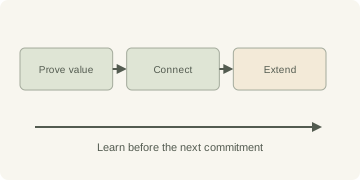
Build and connect the solution in useful increments, with your team involved throughout.
Pilot development
Prove the important part in real use
A bounded pilot exposes practical constraints before wider investment.
What we do together
We build the smallest useful slice and agree who will try it, with which cases and under what limits. Regular demonstrations keep the work grounded in the original business need.
You leave withA working pilot and a record of what it proves.
Application and agent development
Build something people can use
Good ideas need usable interfaces and dependable behaviour.
What we do together
I build applications, agents and workflow components in reviewable increments. We define expected behaviour, work through real tasks and refine the experience with your team as it takes shape.
You leave withWorking software with source, configuration and agreed ownership.
System integration
Connect action to the tools you already use
An answer becomes more useful when it can move the work forward.
What we do together
We connect agreed systems through suitable APIs, events or other supported interfaces. We test permissions, duplicate requests, failures and recovery so handovers behave predictably.
You leave withTested integrations and documented information flows.
Knowledge and data preparation
Give the solution dependable context
An agent cannot consistently help with information it cannot trust or access.
What we do together
We organise relevant business information, resolve gaps and define access. We test retrieval against real questions and agree how content will be updated and who is responsible for it.
You leave withA maintained knowledge structure with access and update rules.
Quality, safety and reliability
Know what you can rely on
A convincing demonstration is not enough evidence for everyday use.
What we do together
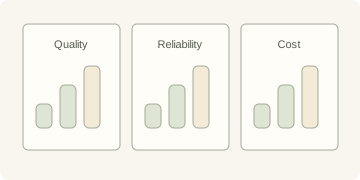
We test representative tasks, edge cases and failure paths. We check answer quality, security, accessibility, performance and cost against agreed criteria, recording limitations and remediation work.
You leave withAn evaluation set, test results and a readiness assessment.
Feedback and iteration
Improve the solution with the people using it
Real use will reveal things the initial design missed.
What we do together
We review pilot feedback and performance with users, prioritise changes and retest. Findings may send us back to discovery or design rather than simply adding more features.
You leave withAn improved release and a prioritised backlog of next changes.
Before moving on
Working capability, evidence of its performance and a decision about readiness.
We review the evidence together and agree whether to proceed, adjust or stop.
Introduce it safely, support the people using it and measure whether it delivers the intended results.
Rollout and adoption
Introduce change at a pace your team can support
A working system only creates value when it fits everyday work.
What we do together
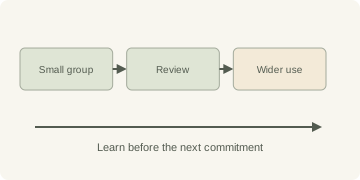
We plan a staged rollout with clear responsibilities, communications and a fallback. We agree what must be true before expanding use and give the team a way to raise problems early.
You leave withA rollout plan, readiness checklist and adoption actions.
Training and enablement
Help people use it with confidence
People need to understand both the capability and its limits.
What we do together
We practise real tasks with the team, explain when to question or override outputs and create concise guidance. We identify local champions and the support people need as habits change.
You leave withPractical training, task guides and escalation guidance.
Ownership and handover
Make responsibility clear after launch
Ongoing operation should not depend on undocumented knowledge.
What we do together
We agree who owns the service, source, accounts, data and decisions. I document how it runs and arrange the agreed handover, maintenance and support responsibilities with your team.
You leave withA handover pack, operating guide and responsibility map.
Monitoring and operations
Spot problems before they become patterns
Models, information and connected services can change over time.
What we do together
We put appropriate monitoring in place for failures, quality, usage and cost. We define alerts, review routines and recovery steps, with named people responsible for responding.
You leave withAn operational dashboard and an incident response runbook.
Outcome measurement
See whether the work made a difference
Usage alone does not tell you whether the investment was worthwhile.
What we do together
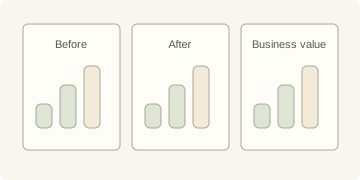
We compare results with the baseline and gather feedback from customers and staff. We examine saved effort, commercial outcomes and quality, including where benefits have not appeared.
You leave withAn outcome review with evidence and recommended decisions.
Continuous improvement
Choose what deserves attention next
The best next step may be refinement, expansion or stopping.
What we do together
We review what we have learned, revisit business priorities and choose the next useful increment. New opportunities return to discovery with evidence from the work already delivered.
You leave withAn updated improvement backlog and next-step roadmap.
Before moving on
An adopted service with clear ownership, support and an improvement plan.
We review the evidence together and agree whether to proceed, adjust or stop.
We agree a useful outcome and how it will be measured, with a baseline and clear numerical targets for success. We agree a fixed fee and how we’ll demonstrate that those targets have been met.
If I don’t deliver the agreed result, you don’t pay the delivery fee.
Start with a useful conversation
You don’t need the whole blueprint to take the first step.
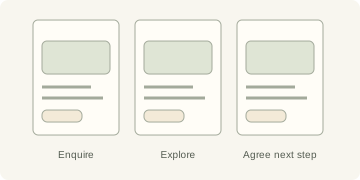
Bring an ambition, a recurring problem or something you have already started. Together, we’ll identify what is worth doing next.