
Discover
The real problem: agents coordinate fine without a person in the loop — the moment one needs to be, there's nowhere for them to work.

Working example · Product Innovation
p-ai-r is where I prove out the argument behind Product Innovation: the interface is part of the product, not an afterthought once the agents are done talking to each other.
The method, not just the example
p-ai-r isn't proof that this approach works in theory. It's what happens when discovery, design, development and delivery stay connected through one accountable person — with an agent workforce doing the work that used to need a team around them.
The real problem: agents coordinate fine without a person in the loop — the moment one needs to be, there's nowhere for them to work.
A decision framework and an experience built around it, not a chat window bolted onto a database.
p-ai-r itself, screen by screen — built alongside an agent workforce rather than a team of engineers.
Shipped, used and improved in the open, not held back for one single finished release.
The part that's easy to skip
People still need to see, decide and trust what happened.
Most agent demonstrations stop at the handoff — one agent calls another, a payload moves, a task completes. That's real progress, and it's also invisible by definition.
The moment a person has to approve a decision, resolve an exception or simply understand what an agent just did on their behalf, an agent-to-agent protocol isn't enough. They need a screen: navigation, context, evidence and a place to act — designed with the same care as the reasoning underneath it.
Case study · Product innovation, made tangible
Existing collaboration tools give people somewhere to work. Agent platforms give AI somewhere to act. The p-ai-r platform fills the gap between them: shared surfaces where people and agents can see the same context, shape decisions and move work forward together.
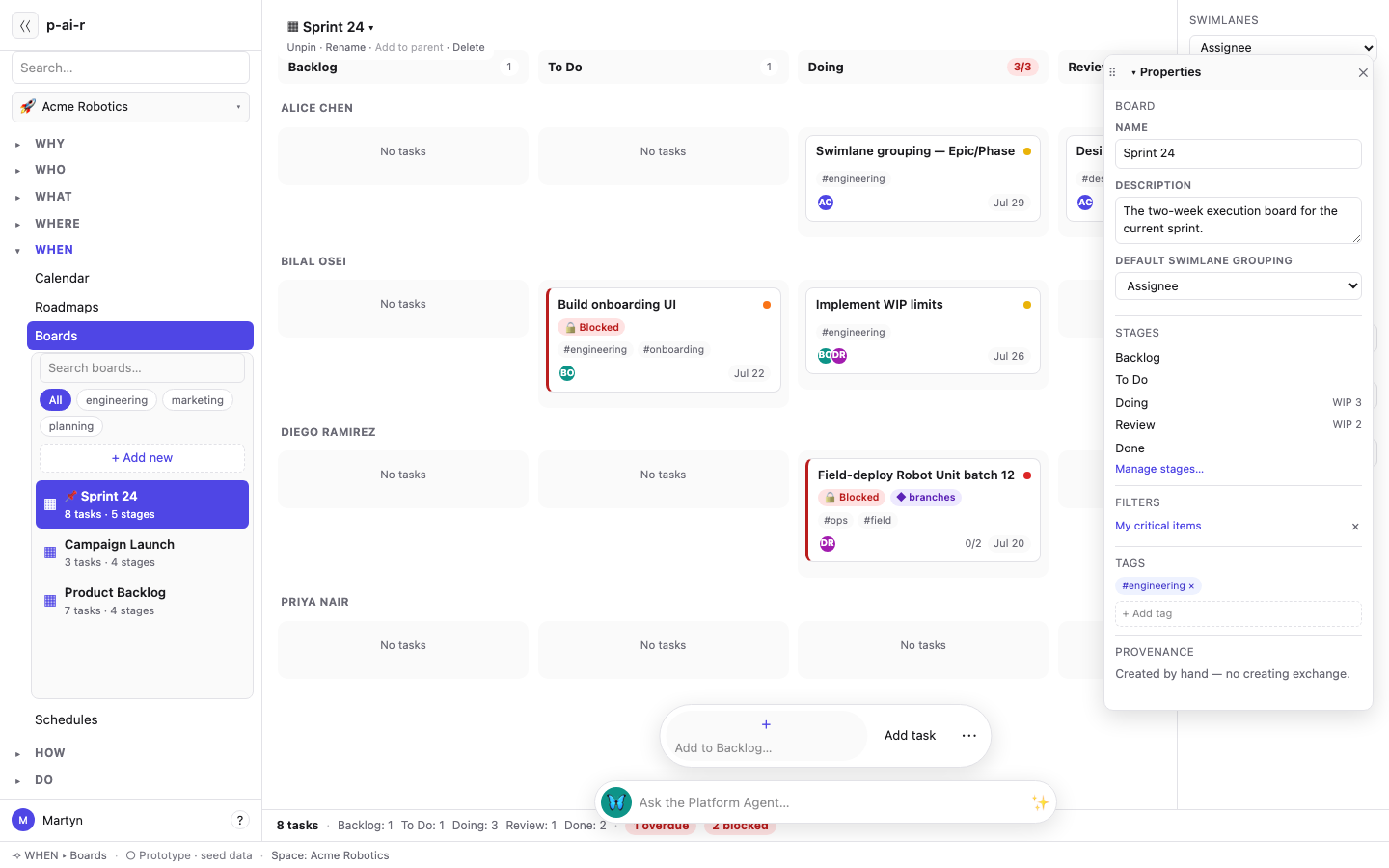
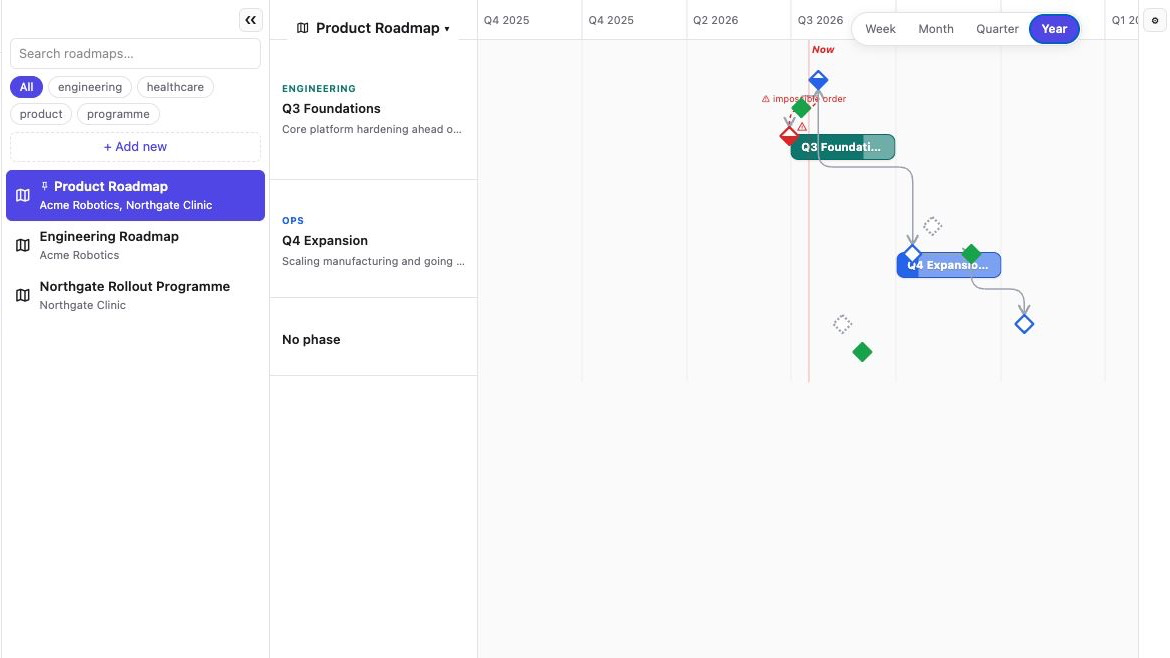
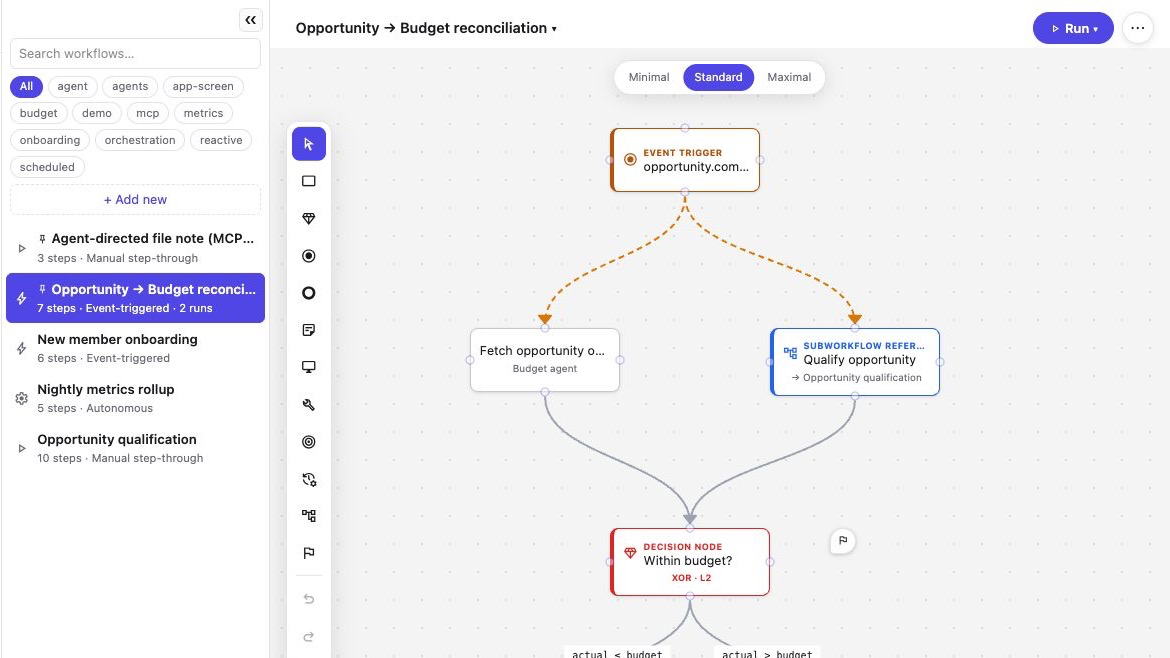
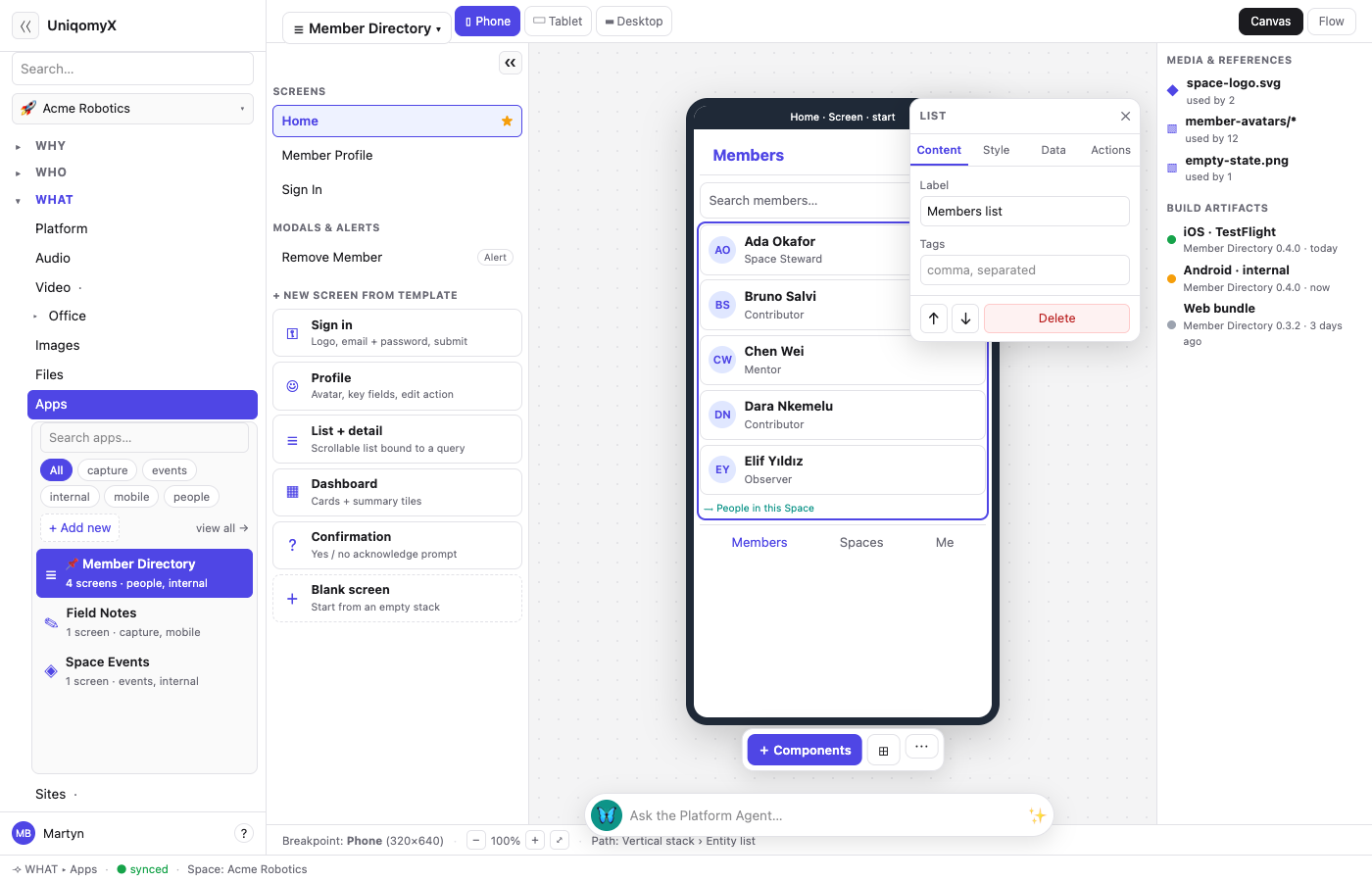
Shared context · evidence · decisions · action
These example lenses show what becomes possible when you build for the gap rather than accept it. Human judgement and agent capability meet in the same body of work, organised by one nine-part decision framework, without losing context between planning and execution.
Built to close a gapp-ai-r is a working example of turning an unmet need into an AI-native product advantage. Explore the working product ↗
How the pieces fit
The same connected context sits underneath both the people using p-ai-r and the agents working alongside them — so nothing has to be re-explained crossing from one to the other.
Good AI work strengthens human capability. It does not ask people to disappear from the process.
That's as true of the products I build as the advice I give — p-ai-r is the proof, not just the argument.
From example to opportunity
Bring the workflow where the interface has been an afterthought, or the agent project that has nowhere for a person to actually work. We can find the smallest useful surface to build first.